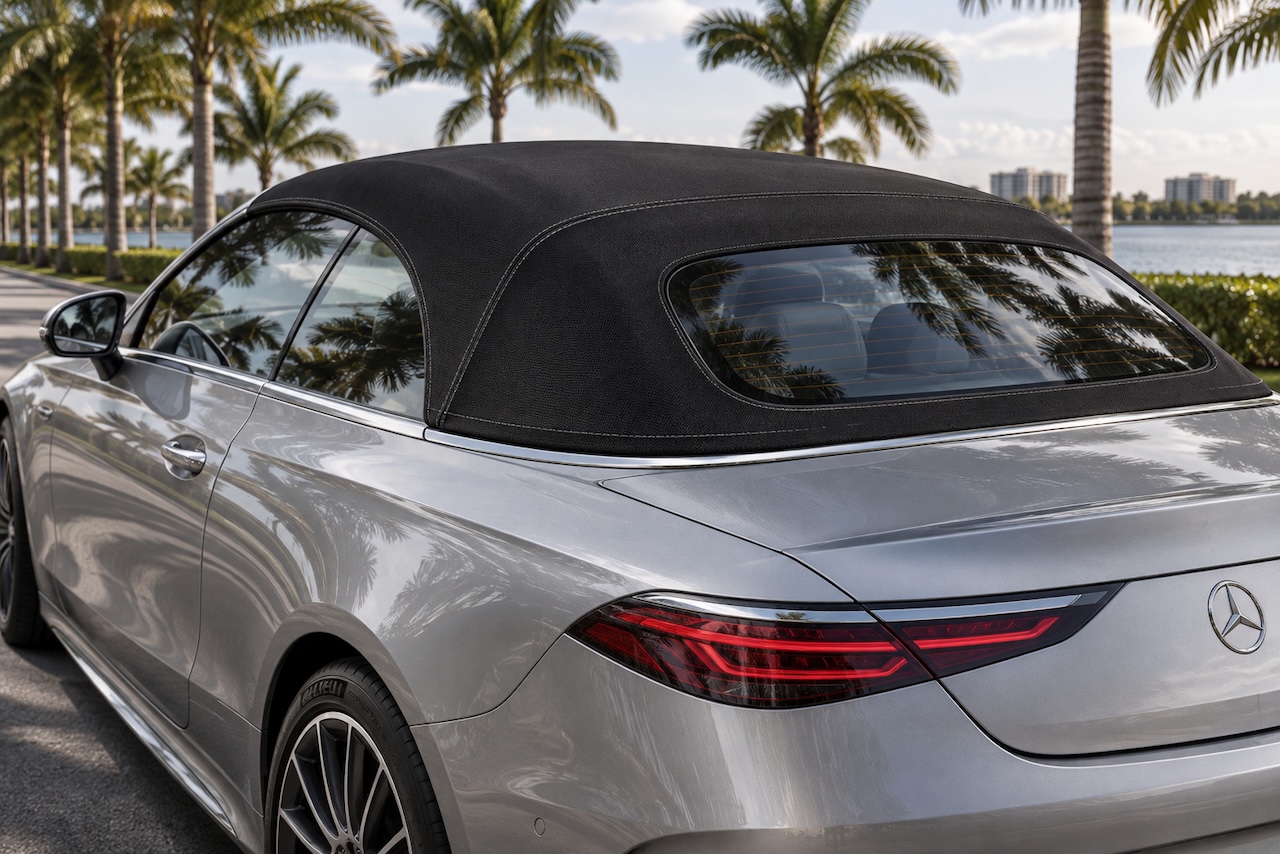
Quick Answer: Check a Mercedes-Benz convertible roof for worn fabric or panels, damaged seals, blocked drains, and changes in how it opens and closes. Leaks, new noises, and roof warnings call for a professional look instead of forcing the mechanism.
A convertible makes open-air driving easy, and the roof is also an engineered system that has to seal the cabin and move smoothly. Depending on the model, it can include fabric or rigid panels, seals, hinges, sensors, latches, and a power-operated mechanism. Bonita Springs drivers face strong sun, humidity, and sudden rainstorms, so regular visual checks help catch wear early. Mercedes-Benz of Bonita Springs Service Center can discuss vehicle care and help work out the right next step when a roof concern comes up.
What to Inspect on the Roof
Quick Answer: Inspect the roof closed for tears, loose stitching, damaged panels, worn seals, and blocked drain paths. Then watch how it opens and closes for uneven movement or new noises.
Start with the roof closed. Look for tears, loose stitching, unusual creases, damaged panels, or sections that no longer sit evenly. Check the accessible weather seals around the windshield, side windows, and rear roof area, and look for debris near drainage channels. Inside, watch for water staining or damp trim.
Operate the roof only as the owner's manual describes, and watch for uneven movement, warning messages, or new mechanical noises. Cabriolet and roadster generations use different roof systems, so the right checks depend on the design of your vehicle.
Signs of a Leaking Convertible Top
Quick Answer: Damp carpet, water stains near the windows, moisture behind trim, or a lingering musty smell can point to a seal, drainage, window alignment, or body opening problem.
Water often shows up away from where it got in, because moisture can travel along trim or behind panels. After rain, check the cabin near the windshield header, side windows, rear glass, and the seals where body parts meet. A leak does not automatically mean the whole roof needs replacing, since a seal, a drain restriction, an adjustment, or another part may be responsible. Repeated moisture deserves prompt attention to limit damage to interior materials and nearby electronics.
Key Takeaways
- Inspect roof fabric or panels, seals, and drain paths regularly.
- Do not force a stuck roof.
- Water can show up away from where it entered.
Weather Seals and Drain Paths
Quick Answer: Weather seals keep water and wind out, and drain paths carry water away from the cabin. Hardened seals or debris in the drains are common reasons a roof leaks.
Weather seals limit water and wind entering the cabin, and over time rubber can compress, harden, get dirty, or crack. Some convertible designs also rely on correct side window positioning to seal. Drain paths carry water away from places it should not collect, and leaves and debris can block them. Owners can look for accessible buildup, but should not push sharp objects into channels or take roof parts apart without model-specific instructions.
When a Roof Will Not Open or Close
Quick Answer: Roof problems can involve required operating conditions, electrical faults, sensors, latches, obstructions, or mechanical parts. The cause depends on the roof and model.
Some convertibles need the trunk partition or luggage area set correctly before the roof will move, and some have speed or other operating conditions. A warning message may explain why movement stopped, but it may also need diagnosis. Do not press the switch again and again or force a stuck roof by hand, because powered mechanisms apply real force and an incorrect emergency procedure can add damage. If the owner's manual lists an emergency closing method, follow it.
How Florida Weather Affects Roof Materials
Long-term UV exposure can fade and age roof materials, and heat can affect some rubber seals. Humidity and seasonal rain add reasons to keep drains and seals in good shape, and a car parked outdoors can age differently from one kept in a garage. Quick afternoon storms are common here, so confirm that the roof closes smoothly and the cabin stays dry before you need it to. Clean soft tops with products and methods suited to the material, and avoid harsh chemicals, hard scrubbing, or pressure washing around seams and seals. Follow the manufacturer's instructions, and let a wet fabric top dry instead of leaving it folded for long stretches.
| Roof Type | Main Care Points | What Can Differ |
|---|
| Fabric soft top | The covering, stitching, seams, and rear window area | Material care and drying matter more |
| Retractable hardtop | Rigid panels, hinges, joints, and seals | More moving sections and latches |
| Both | Seals, drains, and a smooth operating cycle | Procedures and emergency steps vary by model |
Roof Leak or Unusual Roof Behavior?
Describe the symptom and any dashboard message, and the team can talk through the right next step for your vehicle.
Schedule Service
What You Can Safely Check at Home
A basic visual check is reasonable: look for visible wear, note any leaks, watch that the roof operates normally, and keep accessible areas clear of debris. Leave disassembly, roof geometry adjustment, and work on powered mechanisms to people with the right information and equipment. If the roof binds, leaks, or stops mid-cycle, note when it happens and any dashboard message. When you request an appointment, you can choose a vehicle checkup or inspection and describe the concern in your own words, and specialized convertible roof repair options can be confirmed with the team before you book.
Mercedes-Benz Convertible Top Questions in Bonita Springs, FL
How often should a Mercedes-Benz convertible top be inspected?
Quick Answer: Check it regularly and any time you notice leaks, noises, or changes in operation. Follow the care instructions for your model.
What causes a Mercedes-Benz convertible roof to leak?
Quick Answer: Worn seals, blocked drains, damaged roof material, or adjustment problems with the roof or windows are common possibilities.
Can Florida sun damage a convertible soft top?
Quick Answer: Yes. Long UV and heat exposure can fade and age roof materials, and proper care can help preserve condition.
Why won't my Mercedes-Benz convertible top close?
Quick Answer: Operating conditions, sensors, obstructions, electrical faults, or mechanical problems can all be involved. Avoid forcing the roof.
Can blocked drains put water in the cabin?
Quick Answer: Yes. Blocked drain paths can let water collect and enter places it should not. Use gentle, suitable methods to clear accessible debris.
What should I use to clean a Mercedes-Benz fabric roof?
Quick Answer: Use products and methods made for the material and follow the owner's manual. Avoid harsh chemicals and hard scrubbing.
Can I fold a convertible top while it is wet?
Quick Answer: Follow the guidance for your model. Leaving a wet fabric top folded for a long time should be avoided.
What should I do if it starts raining with my convertible top down?
Quick Answer: Close the roof as soon as it is safe to stop, following the owner's manual. Afterward, look for water inside and let the cabin dry.
Who can I contact about a convertible roof concern in Bonita Springs?
Quick Answer: Contact Mercedes-Benz of Bonita Springs Service Center, describe the problem, and ask which inspection or repair options apply to your roof.
A convertible roof does its job when it seals, drains, and moves the way it was designed to. Regular visual checks, gentle cleaning, and prompt attention to leaks or unusual operation protect both the interior and the mechanism.
Mercedes-Benz Convertible Roof Concerns in Bonita Springs, FL
If you notice a leak, a damaged seal, or unusual roof operation, contact Mercedes-Benz of Bonita Springs to describe the concern and confirm which inspection or repair options apply to your roof. Drivers in Bonita Springs and nearby Estero can reach the team through Contact Us.